


Learn to analyze how environment, management, and human interaction influence horse welfare, behavior, and performance through practical, real-world scenarios in this self-paced module.
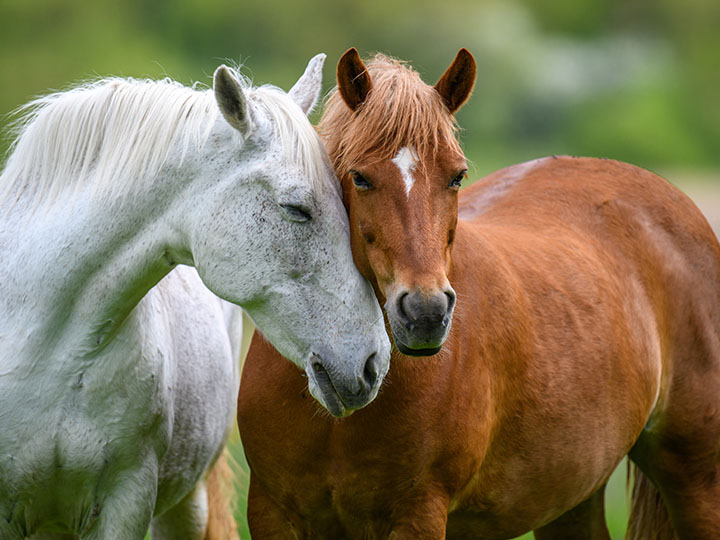

Description
This course offers a comprehensive overview of equine welfare and behavior, focusing on how the environment, management, and the human-animal relationship influence a horse’s health, behavior, and quality of life. Clear frameworks for understanding welfare, such as the Five Freedoms and the Five Domains, are reviewed, and everyday factors that can cause stress or promote adaptation—including feeding, housing, social contact, and work routines—are analyzed. Throughout the program, the relationship between welfare and athletic performance is explored in depth, highlighting why certain practices can affect performance and increase the risk of health and behavioral problems. In addition, the course addresses common practical behavioral problems and everyday situations to help you learn how to interpret signals, recognize likely causes, and make better management decisions.
Upon completing this course, you will be able to:
• Interpret equine welfare by integrating physical, behavioral, and mental dimensions.
• Analyze how stress and human management can influence a horse’s behavior and adaptation in its daily routine.
• Identify risk factors for distress associated with feeding, confinement, lack of social contact, and the stabling environment.
• Relate frameworks such as the Five Freedoms and the Five Domains to specific management examples to understand which aspects of welfare may be affected.
• Detect common practical behavioral problems and recognize their possible causes.
Course content
Learning Outcomes
There are currently no related items to show.
Related Occupations
There are currently no related items to show.
Related Qualifications
There are currently no related items to show.